Written in the dressing room
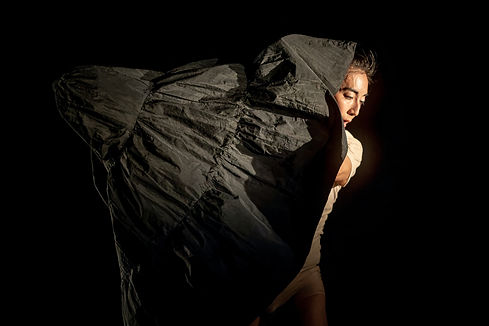
In this piece, the concept of ”expectation” is reflected in the expectations a choreographer and an audience have for a dancer. I want to explore how we deal with societal expectations and what can result from them. Eventually, my research about expectation expanded to pursuing how much the communication can be literal, how much can be just pure interpretation, and who is the observed and the observer. Ultimately, I would like to propose how we can be comfortable and happy while living with expectations from others.
Philosophically, this idea came from noticing how navigation of our complex social world is facilitated by shared social expectations that influence behavior. In general, I’ve noticed that people try to fulfill the expectations of others because they desire to reach an ideal of what is valuable in our society. I am working on the dance piece and trying to fulfill the expectations of a choreographer in the dance studio. I am performing and trying to satisfy the expectations of an audience on the stage.
Choreography, Performance, Set, Costume, Sound design: Tomo Sone
Dramaturgy: Avidan Ben-giat

An Empty Chair

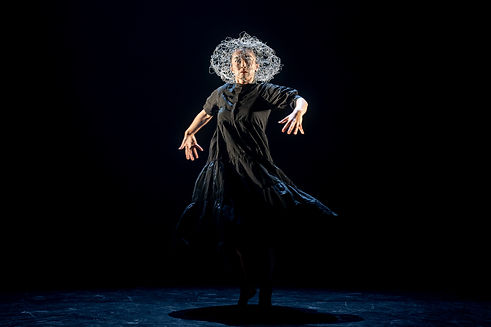
Inspired by the novel The Chairs written by Eugène Lonesco, this piece explores how we live on the thin line between reality and illusion. On the stage, the audience sees the props made of cardboard, fabric, shadow play, and soundscape, which change their shapes throughout the performance and take the audience to a totally different place from where they were at the beginning. Like in absurdist theater represented in Lonesco’s Chair, the audience has the agency to choose what meaning they absorb from the performance.
Choreography, Dance, Costume, Stage Design: Avidan Ben-giat, Tomo Sone, Ido Batash
Music: Harry Kalapana
Lighting Design: Ryora Fudetani

Folded, Cut and Crumpled
The piece uses 4m x 4m paper as part of the performance.
The performer changes the shape and texture of the paper throughout the piece, which includes not only the theme of the piece but also the technique of working with paper. This technique especially focuses on how to crumple the paper. One of the reasons I am working with paper as a material in the work is that, to me, a piece of paper expresses territory. This territory changes size and shape while I work with it. It also changes relationship by coming in and out of the performer’s body, along with its changing textures and weight by moving in the space.
Choreography, Performance, Set Design: Tomo Sone
Costume, Dramaturgy: Avidan Ben-giat
Animation: Daniela Sherer
Lighting Design: Doron Perk

Mobius
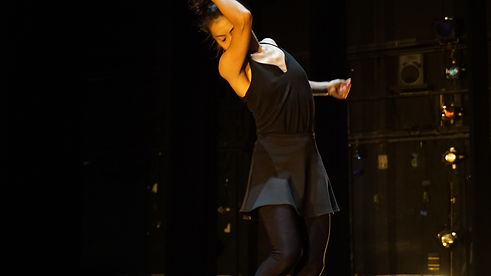
This piece is dealing with the concept of contradiction, in which the ideological behavior of people is fuelling the worse aspects as opposed to their intention of making a better society.
In my conceiving of the work, I also meditated upon a Japanese word of contradiction," 矛盾 - mujyun," created from a folk story originally from China and well-known in Japan. It is the story of a man who sold "a spear that could pierce any shield" and "a shield that could block any spear." A customer asked the man, "What would happen if you pierced that shield with that spear?" and he could not answer. 矛 means a spear, and 盾 means a shield in Japanese.
The absurdity of this story helped me further open up my ideas towards the creation of Mobius. I found that using absurdity elements in theatre could produce a different larger meaning when put together.
For example, in the media, images from around the world show Anti-war protests, while most of the time, the protestors and protest itself become so full of violence and hate that it questions the original ideology. Their voices create a war by itself despite demanding for it to stop.
The piece was created to include these notions of contradiction in every aspect. The music starts with a dramatic overture, promising a grand entrance, but once the curtain is up, the stage is empty, and everything turns quiet. The performer wears the clothes of an ordinary ballet teacher, expected to start her grande solo, but in fact, she only starts moving with small movements and movements, more suitable for an old lady.
At a certain point, the performer suddenly begins to move with intense virtuosity towards the audience, as opposed to all that occurred by then in the piece. She continues by changing direction and performs to no one in the back of the stage, and later even disappears from the stage while the music continues to play. When the performer finally returns, a speaking pattern begins where the performer starts to talk on stage, but as she begins, the light turns off. With darkness on stage, the audience can hear her voice talking, but when the light comes back on, the audience realizes that she has been silent for the entire time and that they have just listened to her recorded voice from afar.
During the creation process of this work, I believed a better future would come. Yet, ten years later, the same events are happening, and the situation is even worse.
Choreography, Performance: Tomo Sone
Lighting design: Ja’acov Barresy
Costume, Dramaturgy: Avidan Ben-giat

Las meninas

Les Meninas is dealing with the fragility of the individual's identity inside the dynamic of a group in the never-ending internal struggle to maintain happiness.
My understanding of identity is that it can be defined through the distinctive characteristics of an individual or by the solidarity of a group, sharing identical features amongst its members. Also, I believe that within the group’s own hierarchy lies various visual characteristics that instantly indicate the individual occupation, economy, lifestyle, etc. Through enhancing these common characteristics, people can in some way protect themselves in a cover of certain normalities.
Choreography, Performance: Tomo Sone
Dramaturgy, Costume: Avidan Ben-giat
Lighting design: Ja’acov Baressy
Animation: Daniela Sherer